.png)
Blogging Made Easy: Edit, Proof & Polish Without the Overwhelm (Part 2)
Updated: May 18
When the First Draft Is Done … and the Panic Sets In |
Polish and Promote your blog |
Editing and Proofreading:The Glow up Phase |
Editing : The Art of Making Your Ideas Flow
|
Editing Secret |
Proofreading :The Last Line of Defence |
What Proofreading Actually Fixes
|
Proofreading Tips that actually works
|
Look & Feel Matters (More Than Most Writers Think)
|
Conclusion |
When the First Draft Is Done… and the Panic Sets In
There’s a moment every writer knows well. The draft is finally finished. The cursor is blinking. The coffee is cold. And a tiny thought whispers: “Now what?”
It’s the same feeling as assembling a piece of furniture and realizing there are leftover screws. Everything looks okay… but is it? Should something be tightened? Moved? Re-aligned?
That moment — right there — is where the real magic of blogging begins.
Because writing the draft is only step one.
And congratulations if you are already there 🙂 (if not go back and read this first)
Now the next step…
Turning it into something people want to read is step two.

So let’s reiterate one thing before we start- why blogging matters? Because that's where the “opportunity” lies to stand out in the crowd of AI Slops.
However, to capture this opportunity you have to “present” it in the right way !
Polish and Promote your Blog
If the previous blog covered the foundations — what a blog is, how to write one, and why blogging matters — this part is about turning a good draft into an irresistible one.
This is where small business owners and solopreneurs begin to see content work for them instead of just sitting on the page.
In this part, the spotlight shifts to:
Editing
Proofreading (yes, they’re different)
Visuals and formatting that make your content easy on the eyes
Think of this section as the friend who gently straightens your collar before you walk into the room. A few tweaks, a little polish, and suddenly you shine.
Ready to make your draft not just “done”… but effective?
Editing & Proofreading: The Glow-Up Phase
Editing and proofreading are the behind-the-scenes heroes of strong writing. They’re the difference between a blog that sounds good in your head and one that lands clearly for your reader.
Editing: The Art of Making Your Ideas Flow
“The first draft is black and white, editing gives the story color.” - Emma Hill
Editing is not just about typos. Editing is also about sense-making.
Editing is where your blog goes from “rough draft with potential” to “clear, confident, reader-ready.” It’s not about grammar policing or nit-picking commas (that’s proofreading’s job). Editing is about shaping meaning — making sure your blog reads like a smooth conversation, not a pile of thoughts stacked on top of each other.
Think of editing as the part where you step back and ask:
“Is this saying what I want it to say… in the way my reader needs to hear it?”
David Ogilvy on editing enough to show it to someone else

Here’s what to look for when you slip into editor mode:
1.Start With the Introduction
Does it pull the reader in?Does it spark curiosity?Does it avoid sounding like a school essay (“In today’s world…” — please retire this phrase forever)?
A strong introduction sets the tone and earns the reader’s attention.If the intro doesn’t work, the rest doesn’t matter.
You can use question to start

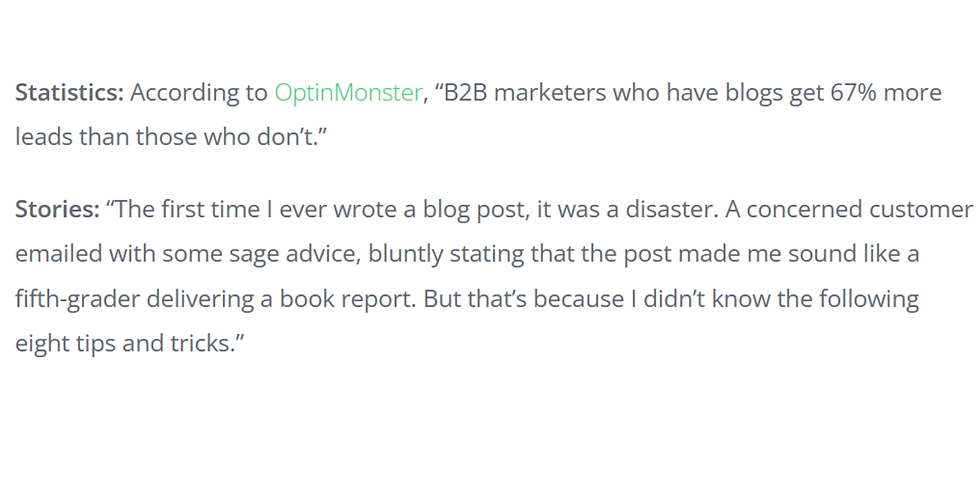
Or you can start with Stats and Story
2. Check the Flow Between Ideas
Every sentence should hand the baton smoothly to the next.If you feel a jarring jump — add a transition.If two paragraphs seem misplaced — rearrange them.
Flow is the secret sauce of readability.
3. Review the Structure (Your Blog’s Backbone)
Is the sequence logical?Does one section build naturally on the next?Would moving a section upward make the whole piece stronger?
Editing is rearranging with purpose — not decoration.
4. Clarify the Message
Is the main idea obvious?Or is it buried under too many words, too many examples, too many detours?
Trim the excess.
Simplify the complicated.
Say the thing — cleanly
Readers reward clarity. They abandon confusion.
5. Keep Only What Adds Value
Every sentence should earn its place.If something feels repetitive, decorative, or “nice but not necessary” — it’s gone.
Concise writing is a sign of respect for the reader’s time.
6. Tone & Voice Check
Does the writing feel warm, human, conversational?Or does it slip into corporate-robot mode?
If a line feels stiff or overly formal, soften it.If a line feels bland, brighten it.
7. Upgrade Your Sentences
Long, winding sentences often sound impressive — until a reader tries to follow them.
Shorter sentences add rhythm.Clearer sentences add impact.
When in doubt: simplify.
Good writing isn’t about jargon.
It’s about being understood.
8. Format for Readability
Readers don’t read.They scan.Formatting helps them stay.
Use:
Short paragraphs
Helpful subheadings
Bold text sparingly
Plenty of white space
Bullet points for instant clarity
This isn’t decoration.This is a reader experience.
9. Inspect the CTA (Your Reader’s Next Step)
Does your blog lead somewhere meaningful?Does the CTA feel helpful, not pushy? And yet it serves the purpose for your business.
A blog without a CTA is like a shop without a checkout counter. Nice to browse — but nowhere to go next.

10. Consider the Overall Reader Experience
If you read it aloud, does it sound smooth?Would a first-time visitor feel guided, not overwhelmed?Does the entire piece feel intentional?
This is the moment where your blog shifts from “fine” to “wow, this is good.”
If editing on your own feels overwhelming take the help of AI .

Editing Secret:
Small shifts → big clarity.
Move a section.
Add a transition.
Tighten a paragraph.
Editing isn’t about making it perfect.
It’s about making it unmistakably clear.
Proofreading: The Last Line of Defense
Proofreading is where tiny mistakes are caught before they chip away at your credibility.Proofreading doesn’t take long.But the trust it builds? That lasts.
Editing looks at the house. Proofreading checks the hinges, the switches, the lightbulbs.
It’s the final sweep for:
Typos
Misspellings
Grammatical mistakes
Punctuation issues
Formatting inconsistencies
This is the stage where a blog becomes professional.
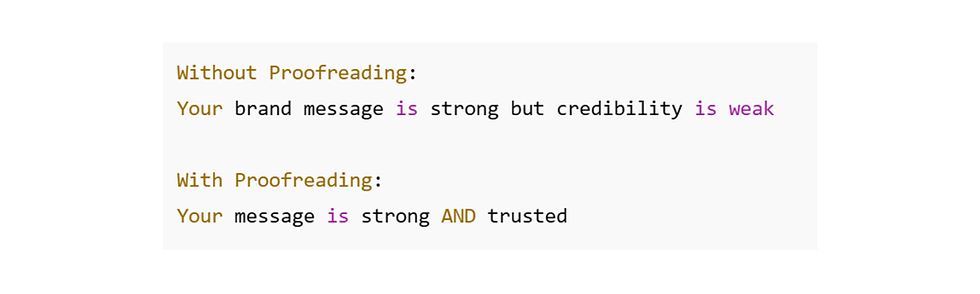
Because here’s the truth:A brilliant idea can lose its shine if it’s sprinkled with distracting errors.
A clean blog signals something powerful: respect for your reader.
It says: “You matter. Your time matters. This content was created with care.”
Small errors can break trust. Polished writing builds it.
Proofreading may not be glamorous — but it’s essential.It’s the final step that makes your content feel confident, thoughtful, and ready to represent your brand.
What Proofreading Actually Fixes
Proofreading isn’t about rewriting.It’s about tightening.Tidying.Catching the small-but-mighty details that slipped through while you were shaping the big picture.
Here’s what gets cleaned up:
1. Typos & Spelling Errors
The sneaky ones your brain autocorrects without asking.The tiny mistakes that quietly chip away at credibility.
2. Punctuation That Behaves
Commas in the right places.Periods where they belong.Quotation marks that don’t wander off.
These tiny marks are small, yes — but they carry a lot of meaning.
Example:
Sentence: I finished the report but he has not reviewed it yet.
Proofread and corrected: I finished the report, but he has not reviewed it yet.
Explanation: A comma is needed before “but” in a compound sentence. It separates two independent clauses, making the sentence easier to read and understand.
3. Grammar That Doesn’t Trip the Reader
Good grammar isn’t about being rigid.It’s about being readable.
Clunky grammar distracts.Smooth grammar disappears — which is exactly what you want.
Clunky:
"Implementing content strategies that are structured in a way that aligns with business objectives helps growth."
Readable:
"A clear content strategy helps your business grow."
Shorter sentences, direct subject–verb–object structure, and simpler phrasing improve readability.
4. Consistency in Formatting
Proofreading checks the housekeeping:
Are bullet points aligned?
Are headings styled the same way?
Is spacing even throughout?
Consistency looks professional.Inconsistency looks rushed.
Proofreading Tips That Actually Work
These tips catch what your eyes love to skip:
Tip 1: Use Tools (As Helpers, Not Replacements)
Tools like Grammarly and Hemingway catch quick errors — but they don’t understand your tone or intent. Let them help, but don’t let them decide.
A Readability Score of this Blog in Hemingway.

Tip 2: Read Every Word (Slowly)
Speed is the enemy of accuracy.Read line by line, not idea by idea.
You’ll be shocked by what slow reading uncovers.
Tip 3: Get a Fresh Pair of Eyes
Someone else will see the mistakes your brain refuses to notice.We all become blind to our own writing.
A colleague, friend, or fellow creator can save you from an unwanted typo cameo. Or even AI.
Look & Feel Matters (More Than Most Writers Think)
“The power of images lies in the fundamentals of human nature; we’re wired to notice, remember, learn from, and respond emotionally to visuals.”- MDG Florida

A beautifully written blog can still fall flat if it looks uninviting.
Harsh but true.
Readers make snap judgments before reading a single sentence.Good design isn’t decoration.Good design is reader survival gear.
Your blog doesn’t have to be fancy — it just needs to feel easy, calm, and welcoming. Let’s make that happen.
1. Use Media That Actually Adds Something (Images and Videos)
Images aren’t fillers.They’re attention magnets.
The right image adds:
Emotion
Clarity
Personality
Breathing room
But here’s the catch:
Not all images are helpful. Like this one

Skip the generic stock photos of people pointing at laptops.
Choose visuals that support the story you’re telling.
Think of images the way you’d season a dish:
Too little: bland
Too much: overwhelming
Just right: delicious
Quick Image Rules:
✔ Use high-quality photos
✔ Choose images that match your message
✔ Avoid blurry or irrelevant visuals (they scream low effort)
✔ Use one meaningful image per major section — not six random ones.
Types of images you can use:
Good Quality and relevant Images

Gifs
A thoughtful image can do what three paragraphs can’t.
And now… Videos: Your Engagement Powerhouse
If images get attention, videos keep it.
Videos do what text often can’t: They show. They explain. They demonstrate. They connect.
A short clip can:
Break down a complex idea in seconds
Walk readers through a process
Showcase a product in real time
Build trust through voice, tone, and authenticity
Increase time on page (Google loves this- helps your SEO)
Turn passive readers into active, engaged humans.
Think of videos as the “host” of your blog — guiding, welcoming, clarifying.
What to Use Videos For:
Quick tutorials
Demonstrations
Step-by-step walkthroughs
Something that you referred in the blog (e.g a Ted talk)
A blog with video says,
“Choose the format that works for you.”
That kind of flexibility builds connection — and keeps people on the page longer.
2. Check How It Looks in Preview Mode
This is a step most writers skip — and regret.
Always preview your blog before publishing:
✔ On desktop
✔ On mobile
✔ In dark mode (if applicable)
Spacing sometimes breaks.Images sometimes resize strangely.Headers sometimes shift.
Previewing helps you catch visual issues before your readers do.
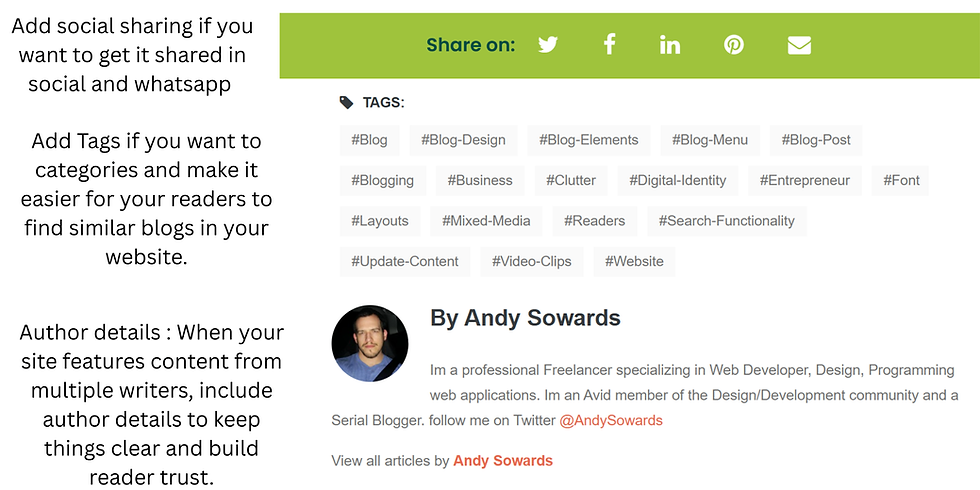
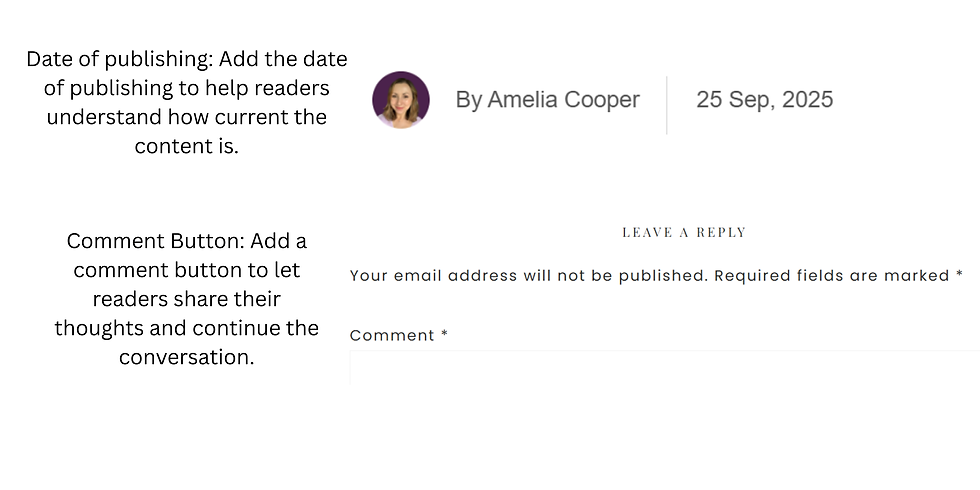
Other Elements to check for before you hit the publish button(if you want):
Conclusion
A polished blog is more than clean writing.It’s clarity wrapped in confidence. It’s respect for your reader’s time and attention. It’s the quiet professionalism that says,
“This brand knows what it’s doing.”
Editing shapes your meaning.
Proofreading sharpens your message.
Design makes the entire experience feel effortless.
Together, they transform your blog from “another post on the internet” into something worth staying for — something readers trust, learn from, and return to.
And here’s the beautiful truth: You don’t have to perfect everything today. Blogs get better every time you show up to write, edit, polish, and care.
Small improvements compound. Consistency compounds. Clarity compounds.
Your blog grows as you grow. Your voice strengthens as you practice. Your readers deepen as you keep showing up.
So here’s your gentle nudge forward:
Choose one draft today — just one — and give it ten focused minutes.
Fix a headline.
Smooth a paragraph.
Add a subheading.
Adjust spacing.
Replace one weak sentence with a stronger one.
Add Images where it is relevant
Tiny upgrades → big transformation.
Your best work isn’t far away.
Begin with what you have.
Your voice strengthens with every edit,
and your blog becomes something worth returning to.
Start today — even if it’s just one sentence at a time.
And once your blog is polished and reader-ready, the next step is making sure the right people discover it. That’s where Part 3 comes in — a friendly, non-technical guide to SEO that shows you how to make your blog visible, searchable, and findable without the overwhelm.


